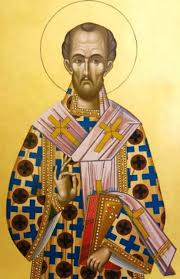
Pain is the Price

No Holiness Without Suffering

There is no way around this.

No shortcuts. No loopholes. No easy road.

Pain is the price of holiness.

Every saint paid it.

Every true disciple embraced it.

And if you want to be holy, you will not escape it.

–1. The Lie of Easy Christianity

Somewhere along the way, we were told a lie.

A lie that says if we follow God, life will get easier.That holiness means peace, happiness, and blessings without cost.That suffering is a mistake, an accident, something to avoid.

But when you look at the lives of the saints, you see the opposite.

Holiness doesn’t eliminate suffering—it guarantees it.

Jesus didn’t say,

“Follow Me, and I’ll make your life comfortable.”

He said, “Take up your cross daily and follow Me.” (Luke 9:23)

He said, “If the world hates you, keep in mind that it hated Me first.” (John 15:18)

He said, “In this world, you will have trouble.” (John 16:33)

The road to sainthood is paved with pain.

And anyone who tells you otherwise is not telling you the truth.

–2. The Saints Who Embraced Suffering

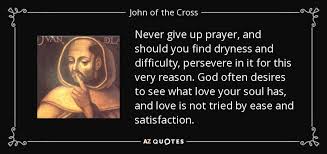
St. John of the Cross: The Prisoner of Holiness

He only wanted to reform his order, to bring his fellow monks back to a deeper life of prayer.

For that, his own brothers threw him into a prison cell—a dark, filthy hole where they beat him, starved him, and left him to rot.

Most people would have cursed God.Most people would have given up.

But John used that suffering to draw closer to God.

It was in that cell—half-starved and bleeding—that he wrote some of the most profound poetry on divine love.

Because suffering, when embraced for God, does not destroy you.

It transforms you.

–St. Padre Pio: The Priest Who Bled Like Christ

He wanted to be holy.

And for that, God gave him the wounds of Christ.The stigmata.

For fifty years, he bore those wounds in his hands, feet, and side.

Fifty years of agonizing pain—physically, emotionally, and spiritually.

Did he beg God to take it away? No.

He said:”I suffer only when I don’t suffer.”

He understood something most people don’t:

Pain, when given to God, is a gift.

—St. Thérèse of Lisieux: The Little Flower Who Died in Agony

People imagine her as soft, sweet, gentle.

But few realize how much she suffered.

She died at 24 from tuberculosis, a slow and agonizing disease.

She could barely breathe.

Her body wasted away.

Her soul went through a terrible spiritual darkness, where she felt abandoned by God.

But she never stopped trusting.

She said, “I choose all.”

She chose suffering.

She chose the cross.

She chose to unite herself to Christ, even when she couldn’t feel Him.

And that’s why she became a saint.

–3. Why Suffering is the Fire of Holiness🔥

Suffering detaches you from the world.

When you suffer, you realize that money, comfort, success—none of it matters.

You see the world for what it is: temporary, passing away.

🔥 Suffering purifies you.

Gold must be burned before it shines.

Souls must be crushed before they become holy.

🔥 Suffering makes you like Christ.

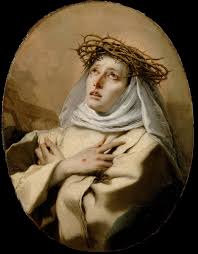
Jesus was not crowned with gold. He was crowned with thorns.

Jesus did not sit on a throne. He was nailed to a cross.

And if we want to be saints, we must go where He went.

–4. Why Most People Will Never Be Saints

Most people run from suffering.

They complain when life is hard.

They beg God to take away every cross.

They believe that suffering is unfair.

Saints do the opposite.

They embrace suffering.

They offer their pain to God.

They see suffering as their path to holiness.

That’s why there are few saints.

Because few are willing to pay the price.

—5. Your Cross is Coming—Will You Carry It?

You don’t have to look for suffering.

It will find you.

Maybe it will be rejection.

Maybe it will be sickness.

Maybe it will be loss.

Maybe it will be deep, spiritual darkness.

When it comes, you will have two choices:

1. Run from it—and remain weak.

2. Embrace it—and become a saint.

This is what separates ordinary people from saints.Saints do not suffer less.

They suffer more—but they suffer well.

They take their pain, their trials, their grief— And they offer it up as a sacrifice to God.

They do not waste suffering.

—Meditative Challenge

Tonight, kneel before God and ask:

Have I been running from suffering?

Do I complain about my trials, instead of offering them to God?

Am I willing to suffer for holiness?

Then make a decision.

Next time pain comes, you will not complain.

Next time suffering arrives, you will embrace it.

And you will say:

“Lord, if this is my cross, I accept it. If this is the path to holiness, I will walk it.”

Because pain is the price of sainthood.

–Prayer of Surrender to Suffering

Jesus, You suffered for me.

You bore the thorns, the nails, the wounds.

You did not run from suffering—you embraced it.

Teach me to do the same.

When pain comes, let me not complain.

When trials come, let me not run.

When suffering comes, let me see it as my road to You.

Make me strong. Make me holy. Make me Yours.

🔥 No turning back. Walk the path. Become the saint. 🔥
Day 04. God or Nothing

The Saint’s Only Real Choice

There comes a moment when every saint must make the ultimate decision.

It’s not about good vs. bad. It’s not about choosing between sin and virtue. It goes far beyond that.

At some point, the true saint realizes:

There are only two options in this life.

God—or nothing.
No middle ground. No compromise. No safety nets.

And that’s where most people fail.

1. The Man Who Had Everything—And Walked Away From It

Let’s talk about St. Francis of Assisi.

He was born rich. Filthy rich. He had everything—money, power, pleasure, influence.

And for a while, he enjoyed it. He lived like a prince, partying, chasing dreams of knighthood. But then something happened.

God called him.

And suddenly, everything else looked worthless.

So what did he do?

  • He walked away from his inheritance.
  • He stripped naked in the public square, renouncing his wealth.
  • He embraced poverty like a lover, calling it “Lady Poverty.”
  • He dedicated his life entirely to God—with nothing left for himself.

Because for him, it wasn’t about living a “better” life.

It was God or nothing.

2. The Saint Who Tore Off His Crown

St. Thomas More was one of the most powerful men in England.

He was the Chancellor to King Henry VIII—the highest political position after the king himself.

But then the king demanded something More couldn’t give. Henry VIII broke from the Catholic Church and made himself the head of a new church. More was expected to go along with it.

He refused.

His friends begged him: “Just sign the oath. Just say the words. You don’t have to mean it.”

But More knew the truth.

If he didn’t have God, he had nothing.

So he gave up everything—his power, his position, his wealth, his family’s security.

They imprisoned him. Then they beheaded him.

And he died with a smile on his face.

Because for him, the choice had already been made.
God or nothing.

3. The Saints Who Chose Suffering Over Compromise

Holiness is not about adding God to your life.

It’s about losing your life completely.

This is why saints do crazy things:

  • St. Teresa of the Andes gave up her youth, beauty, and dreams of marriage to live a hidden life in a convent, dying at 19.
  • St. Paul Miki was crucified alongside his fellow missionaries, preaching from the cross as he bled out.
  • St. Ignatius of Antioch begged his followers not to save him from execution because he wanted to be “ground like wheat” in the jaws of lions.
  • St. Maximilian Kolbe took the place of another man in Auschwitz, starving to death in a bunker.

All of them had one thing in common:

They saw the world for what it really is—nothing.

Fame? Nothing.
Wealth? Nothing.
Comfort? Nothing.
Reputation? Nothing.

Only God mattered.

4. Why Most People Never Make This Choice

Most Christians want God.

But they also want something else.

They want God and their comfortable life.
God and their secret attachments.
God and their personal plans.

So they keep negotiating. They keep trying to balance both.

But it never works.

Because at some point, the demands of God will clash with the desires of the world.
And when that moment comes, you will have to choose:

  • God—or the relationship?
  • God—or the money?
  • God—or your pride?
  • God—or your comfort?

There is no neutral ground.

It’s all or nothing.

5. The Line You Must Cross

One day, you will come to a moment where you must decide, once and for all:

Will God be everything?
Or will He just be another part of your life?

Saints make their choice early—and never look back.

The world may offer them riches, pleasure, honor, or security.

They reject it.

Because if they don’t have God, they have nothing.

Meditative Challenge

Tonight, take stock of your heart. What is competing with God in your life?

  • Is it your desire for control?
  • Is it a dream you refuse to surrender?
  • Is it a sin you secretly love?
  • Is it a fear of what you might lose?

Write it down.

Then say these words out loud:

“If I don’t have God, I have nothing.”

Let that truth sink in. Let it burn away every hesitation.

Because once you see the world for what it is—only God will remain.

Prayer of Total Abandonment

My God, You are my everything.
Take what You must take. Give what You must give.
Strip me of all that is not You.
Break every attachment. Kill every distraction. Burn every bridge.
If I don’t have You, I have nothing.
So I choose You. Fully. Finally. Forever.

🔥 No turning back. Walk the path. Become the saint. 🔥

Day 03. Burn the Bridges

No Turning Back Once You Start

Some people treat holiness like a diet.
They start strong.
They cut out a few bad habits.
They feel inspired.

Then temptation hits.
Old comforts start calling.
And before they know it, they’re back where they started.

Saints don’t live like that.

Because saints burn the bridges behind them—so there’s no way back.

1. The Day Elisha Burned His Old Life

When Elijah called Elisha to follow him, what did Elisha do?

He didn’t say, “Let me try this prophet thing out for a while and see if it works.”
He didn’t say, “I’ll keep my old life just in case.”

No. He slaughtered his oxen and burned his plow (1 Kings 19:21).

His oxen were his livelihood. His plow was his career.

He set it all on fire.

Why?

Because he was never going back.

He removed the option of retreat. He made sure there was nothing left to return to.

And that’s the difference between saints and ordinary people: saints don’t keep a backup plan.

2. The Saints Who Cut the Rope

  • St. Francis of Assisi stripped himself naked in the public square, renouncing his inheritance so completely that he had nothing left but God.
  • St. Anthony the Great gave away his family’s fortune and walked into the desert, cutting himself off from the distractions of the world.
  • St. Thomas Aquinas’s family locked him in a tower and sent a prostitute to tempt him. He chased her away with a burning log—forever sealing his commitment to purity.
  • St. Kateri Tekakwitha, a Native American convert, was disowned and forced to flee her village to protect her faith.

Each one had a moment when they could have turned back—but they didn’t.

Because they had already cut the rope.

3. Why You Keep Falling Back

Maybe you’ve tried to follow Christ before.

You made a decision. You felt the fire. You tried to change.

But after a few days, weeks, or months, the old temptations came back, and you gave in.

Why?

Because you left a bridge standing.

  • You didn’t delete that number.
  • You didn’t get rid of that app.
  • You didn’t walk away from that toxic friend group.
  • You didn’t destroy access to that sin.

And because of that, when the fire faded, it was too easy to go back.

Saints don’t play that game.

They burn the bridge so completely that there is no way back.

4. The Rich Young Man Who Kept His Bridge

In the Gospel, a rich young man came to Jesus and asked how to inherit eternal life.

Jesus told him: Sell everything. Follow Me.

And what did he do?

He walked away sad.

Because deep down, he wanted to keep his bridge standing—just in case.

He wanted God and his comfort.
He wanted holiness and security.
He wanted to follow Christ but not at full cost.

And that’s why he never became a saint.

5. The Point of No Return

Every saint has a moment when they reach the point of no return—when they cut off any possibility of going back.

This moment will come for you.

And when it does, you will have two choices:

  1. Keep a lifeline to your past, holding onto your old ways, just in case.
  2. Burn the bridge and make it impossible to return.

If you choose the first, you will fail.
If you choose the second, you will be free.

It’s that simple.

Meditative Challenge

Tonight, sit in silence before God and ask:

  • What bridges have I left standing?
  • What do I still run back to when I’m weak?
  • What is keeping me from full commitment?

Then take radical action.

If it’s a toxic relationship, cut it off.
If it’s a hidden sin, expose it.
If it’s a source of temptation, eliminate it permanently.

Don’t just “try” to change. Burn the bridge so there’s no way back.

Prayer of No Return

Lord, I stand before You with no way back.
I burn every bridge to my old self.
I surrender every comfort, every attachment, and every excuse.
I choose You—not halfheartedly, but fully, finally, and forever.
Let me never look back. Let me never return.
Let my past be ashes, and my future be only You.
In Jesus’ name. Amen.

🔥 No turning back. Walk the path. Become the saint. 🔥
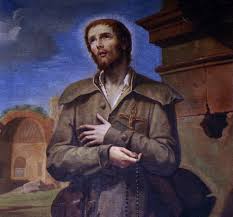
Day 02. Dead Men Walking

Why saints must die before they truly live

Most people want to be saints.

Few are willing to die for it.

And no, I don’t just mean physical martyrdom. I mean something far harder—the death of self.

Because here’s the truth: No one becomes a saint until they first die.


1. The Saint Who Dug His Own Grave

Let’s talk about St. Benedict Joseph Labre.

He wanted to be a monk. But every monastery rejected him. He was too weak. Too sickly. Too fragile.

So what did he do?

He became a beggar. He wandered from shrine to shrine, wearing rags, sleeping in the streets, living off scraps. People thought he was insane. But he wasn’t.

He had already died to the world.

By the time he physically died at 35, he was already long gone in spirit—buried in self-denial, resurrected only in Christ.

And that’s the secret. The ones who become saints are already dead before they leave this earth.

They no longer care about reputation.
They no longer fear suffering.
They no longer seek comfort.

They are dead men walking.

2. The Death of the Will

St. Catherine of Siena once prayed,

“Lord, take away my will, and give me Yours.”

And He did.

She lived in extreme fasting and self-denial, caring for the sick, rebuking corrupt leaders, and receiving divine visions. She wrote letters that shook the Church, influencing popes and kings.

But she had no life of her own.

She had given it up. Her will was dead.

This is what most people fear.

They want holiness, but they still want to hold the reins. They want sainthood, but they don’t want to crucify their desires.

It doesn’t work like that.

Saints aren’t people who merely “try” to be good. They are people whose wills have been shattered and replaced with God’s.

And until you die in this way, you will never truly live.

3. The Death of the Body

For many saints, the death of the will wasn’t enough.

They went further. They crucified their flesh.

  • St. Rose of Lima rubbed pepper into her face to destroy her beauty and avoid vanity.
  • St. Simeon Stylites lived on top of a pillar for 37 years, exposed to the elements.
  • St. Francis of Assisi rolled in the snow to fight temptation.
  • St. Padre Pio bore the stigmata—open wounds that never healed, mirroring Christ’s crucifixion.

Were they crazy? Maybe to the world.

But to them, the world was already dead.

They didn’t live for comfort. They lived for something greater. And because they chose to die, they found life in ways most of us never will.

4. The Death of Reputation

St. John of the Cross was imprisoned by his own fellow monks.

He had been trying to reform the Carmelite order, bringing them back to holiness. The others? They hated it. So they locked him in a tiny, dark cell, whipping him regularly.

But instead of breaking, he wrote poetry about God’s love in the darkness.

Instead of resenting, he embraced the suffering.

Instead of defending himself, he died to his reputation.

Most of us can’t stand being misunderstood. We want people to know our intentions, to think well of us.

Saints?

They let it go.

They let their reputation die, knowing that only God’s opinion matters.

5. The Death of Fear

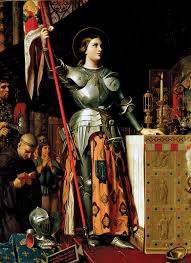
St. Joan of Arc was 17 when she led an army.

She wasn’t trained. She wasn’t educated. She wasn’t a warrior.

But she wasn’t afraid.

Even when she was captured, even when she was on trial, even when they burned her at the stake—she stood firm.

Because she had already died.

She had died to fear. To self-preservation. To doubt.

And because of that, she lived more fully than most people ever will.

Meditative Challenge

Tonight, take some time to reflect. What still needs to die in you?

  • Your will? Do you still insist on your own way?
  • Your body? Are you too attached to comfort and ease?
  • Your reputation? Are you afraid of what people think?
  • Your fear? Are you holding back because of doubt?
Write it down. Then ask God to kill it.
Because until you die, you will never truly live.

Day 01. Why You’re Not a Saint (Yet)

The brutal truth about holiness

You admire the saints.

Maybe you’ve read about St. Francis of Assisi, who stripped himself naked in the town square, renouncing his wealth for a life of radical poverty.

Or St. Teresa of Ávila, who endured severe illness and visions of God while being scrutinized by the Inquisition.

Perhaps you’ve heard of the Desert Fathers, who lived in the wilderness on barely anything but prayer and locusts.

And yet, here you are.

Still struggling. Still entangled in the mundane. Still caught between the world and the call.

So let’s be brutally honest: why aren’t you a saint yet?

1. You’re Comfortable

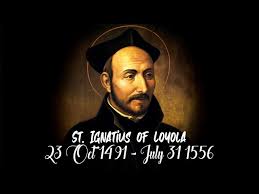
Ever heard of St. Ignatius of Loyola? Before he became a saint, he was a knight obsessed with worldly honor and glory. He wanted to be a legendary warrior. But then a cannonball shattered his leg.

God had to literally break him to get his attention.

While recovering, he had nothing to read except The Life of Christ and stories of saints. That was when he realized—he had wasted his life chasing shadows. His pain became his awakening. He gave up everything and started a life of radical spiritual discipline, founding the Jesuits, one of the most powerful missionary orders in history.

Most people never become saints because they refuse to be broken.

We avoid pain, suffering, and sacrifice at all costs. We pray for comfort, security, and success—but saints pray for transformation, no matter the cost.

So ask yourself: What are you clinging to? What comforts are keeping you from holiness?

2. You Love Your Will More Than God’s Will

St. Mary of Egypt was a prostitute. Not just any prostitute—she was so addicted to pleasure that she seduced men for the thrill, not even for money. One day, out of curiosity, she tried to enter a church in Jerusalem.

She couldn’t.

An invisible force stopped her at the door. Again and again, she tried. That was when she realized—it was her sin blocking her. She broke down in tears, repented on the spot, and ran into the desert, where she lived for nearly 50 years in total solitude, battling the demons of her past and growing in intimacy with God.

You see, Mary of Egypt could have resisted. She could have justified herself, excused her past, and walked away. But she didn’t.

She surrendered.

Most people never become saints because they refuse to fully surrender their will. They still hold onto their preferences, their ambitions, their grudges, their own way of doing things. But saints let go. They let God have total control.

So ask yourself:

Are you still running your own life, or have you truly surrendered?

3. You’re Not Ruthless with Sin

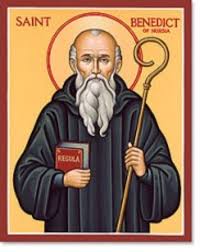
St. Benedict of Nursia was once tempted with lust so strongly that he did something unthinkable—he threw himself into a thorn bush, rolling in it until his body was bleeding, just to kill the desire. Extreme? Maybe. But that’s why he became a saint, and most people don’t.

Saints don’t negotiate with sin. They don’t rationalize it. They don’t “work on it” slowly over time while still entertaining it in secret. They kill it. Immediately.

If you’re still coddling sinful habits, still making excuses, still compromising—you will never be a saint.

So ask yourself:

What sins are you allowing to live in you? How far are you willing to go to cut them out?

4. You Fear People More Than You Fear God

St. John Chrysostom was one of the greatest preachers of all time. His name literally means “Golden Mouth.” But you know what happened to him?

He was exiled. Twice.

Why? Because he refused to water down the truth. He called out corruption, immorality, and lukewarm Christianity—even when it meant standing alone. The Empress hated him. The Church authorities betrayed him. He died in exile. But today, the Church calls him a saint.

Most people will never be saints because they are too afraid of what others will think. They dilute the truth. They stay silent when they should speak. They compromise to fit in. But saints don’t care. They live for an audience of One.

So ask yourself:

Do you fear God enough to stand alone?

5. You Haven’t Reached the Point of No Return

There’s a moment in every saint’s life when they realize: there’s no turning back.

For St. Francis, it was the moment he stripped off his clothes and walked away from his father’s wealth.
For St. Paul, it was the moment he was blinded on the road to Damascus.
For St. Augustine, it was the moment he finally surrendered his desires and prayed, “Take and read,” leading him to Scripture.
For St. Joan of Arc, it was the moment she put on armor and led an army at 17 years old, knowing it would cost her everything.

Saints don’t leave themselves an escape route.

They don’t have a backup plan. They don’t “try” holiness—they commit to it completely.

So ask yourself:

Have you truly decided, once and for all, that you will be a saint? Or are you still leaving the door open for an easier life?

Meditative Challenge

Tonight, take some time in absolute silence. No phone. No distractions. Just you and God.

Ask Him:

  1. What comforts are holding me back from holiness?
  2. What sins am I still tolerating?
  3. Where have I refused to surrender?
  4. Who am I afraid of offending by living fully for God?
  5. Have I truly reached the point of no return?
Then listen. Really listen.
If He shows you something—act on it immediately. Saints don’t delay.
The path is open. Walk it.

Welcome to SaintsPath: Walk the Path. Become the Saint.

This is not just a website. It’s a call. A challenge. A relentless pursuit of the highest calling known to man—sainthood.

Too many settle for mediocrity, content with just being ‘good enough.’ But history tells a different story. The saints—the real ones—were never ‘good enough.’ They were radical, extreme, consumed. They were flames that could not be put out, men and women who walked this earth as if they belonged to another world.

And that’s exactly what they did. They belonged to God—entirely, wholly, with nothing held back.

Are You Ready for the Narrow Path?

If you’re here for comfort, turn back now. This is not the path for the weak. Sainthood is war. A war against yourself, against compromise, against everything that seeks to dull the fire of holiness. This path will strip you down, break you, reshape you, and forge you into something unshakable. But only if you are willing.

April 1 – 30: The 30-Day Sainthood Training Challenge

Starting April 1, 2025, we launch into the most brutal, honest, and transformative journey you’ve ever encountered. This is not theory. This is not feel-good spirituality. This is training—forged from the fire of saints who lived it before us.

For 30 days, we will break down the raw, unapologetic truths of sainthood. Each day will be a battle, a confrontation with reality. You will be challenged, shaken, and—if you stay the course—changed.

The path is before you. The choice is yours.

Subscribe. Follow. Prepare. The call to sainthood is now.

Are you ready?

Walk the Path. Become the Saint